Few desserts command admiration in the pastry world quite like an authentic New York–style cheesecake. Towering, rich, and velvety smooth, it strikes the delicate balance between dense dairy decadence and a clean, tangy finish. Yet, many home bakers dread the process, fearing unsightly surface fissures, curdled batter, or a soggy graham cracker crust. Achieving pastry-chef perfection requires understanding low-temperature custard physics, moisture buffering, and disciplined cooling.
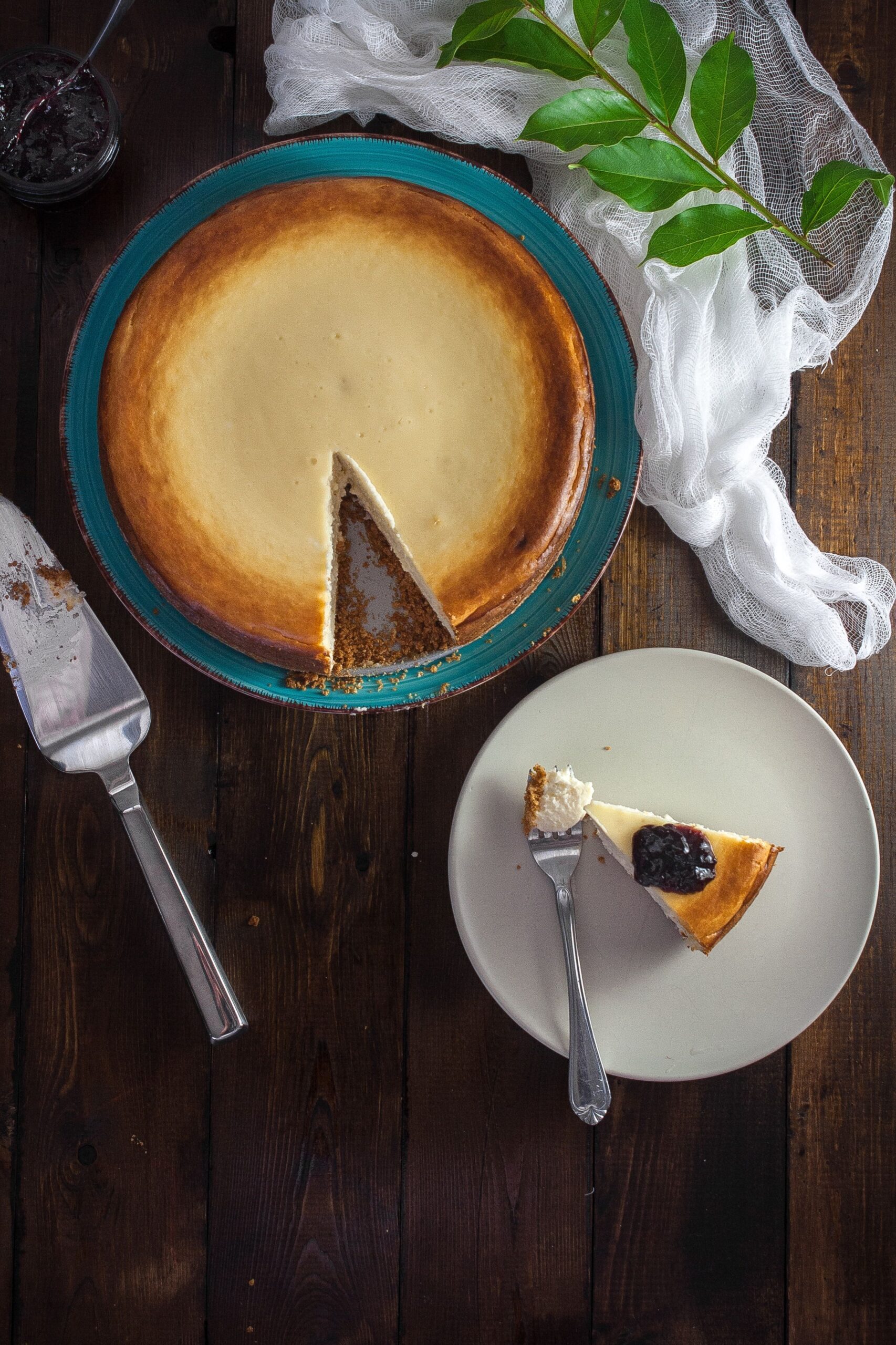
Cheesecake Physics: Why Cracks and Curdling Occur
Despite its name, cheesecake is not a cake—it is an egg-rich baked custard. Its structural integrity depends on how dairy fats and egg proteins coagulate under heat:
- The Thermal Shock Trap: When egg proteins heat too quickly, they contract violently and squeeze out water (syneresis), creating a rubbery texture and deep center cracks.
- Trapped Air Pockets: Whipping cheesecake batter on high speed incorporates excessive microscopic air bubbles. In the oven, these bubbles expand, lift the surface, and collapse upon cooling, tearing the delicate top.
- The Role of the Water Bath (Bain-Marie): Surrounding your springform pan with hot water acts as a thermal buffer. Water cannot exceed 212°F (100°C) at atmospheric pressure, ensuring the edges bake at the exact same gentle rate as the deep center.
Key Ingredients for the Classic New York Profile
Authentic New York cheesecake relies on heavy full-fat dairy balanced with a distinctive acidity:
- Standard Block Cream Cheese: 32 oz (four 8-oz blocks) full-fat brick cream cheese, brought completely to room temperature. Never use spreadable cream cheese tubs, which contain excess water and stabilizers.
- Sour Cream or Heavy Cream: 1 cup full-fat sour cream adds the traditional New York tang while softening the dense cheese proteins into silk.
- Cornstarch Stabilizer: 2 tablespoons of cornstarch or all-purpose flour protect egg proteins from over-coagulating, dramatically reducing crack risks.
- Fresh Whole Eggs: 4 large whole eggs plus 1 egg yolk (room temperature) to provide rich custardy binding without excess aeration.
- The Crust: 2 cups finely ground graham cracker crumbs, 1/3 cup melted unsalted butter, and 2 tablespoons granulated sugar packed firmly into the base.
Step-by-Step Baking Protocol
- Blind Bake the Crust: Preheat oven to 325°F (165°C). Combine graham cracker crumbs, melted butter, and sugar. Press firmly into the bottom and slightly up the sides of a 9-inch springform pan using the flat bottom of a glass. Bake for 10 minutes, then cool completely.
- Waterproof the Pan: Wrap the exterior bottom and sides of your springform pan with two layers of heavy-duty aluminum foil, or set it inside a slightly larger silicone cake pan to create a 100% leak-proof seal against bath water.
- Cream the Cheese Gently: In a stand mixer fitted with the paddle attachment (never the whisk), beat softened cream cheese, granulated sugar, and cornstarch on low speed for 3 minutes until completely smooth, scraping the bowl often.
- Blend Wet Dairy & Eggs: Add sour cream, pure vanilla extract, and fresh lemon juice on low speed. Add eggs one at a time, mixing on the lowest setting just until each yolk is absorbed. Tap the bowl firmly on the counter to release trapped air pockets.
- Set up the Water Bath: Pour batter over the cooled crust. Place the foil-wrapped pan into a large, deep roasting tray. Transfer to the oven rack, then carefully pour boiling water into the roasting pan until it reaches halfway up the sides of the springform pan.
- Bake and Check Doneness: Bake at 325°F for 65 to 75 minutes. Do not poke with a knife. The cheesecake is ready when the edges are set and lightly puffed, but a 2-to-3-inch circle in the very center still wobbles gently like firm gelatin when the pan is nudged.
The Multi-Stage Cooling Sequence
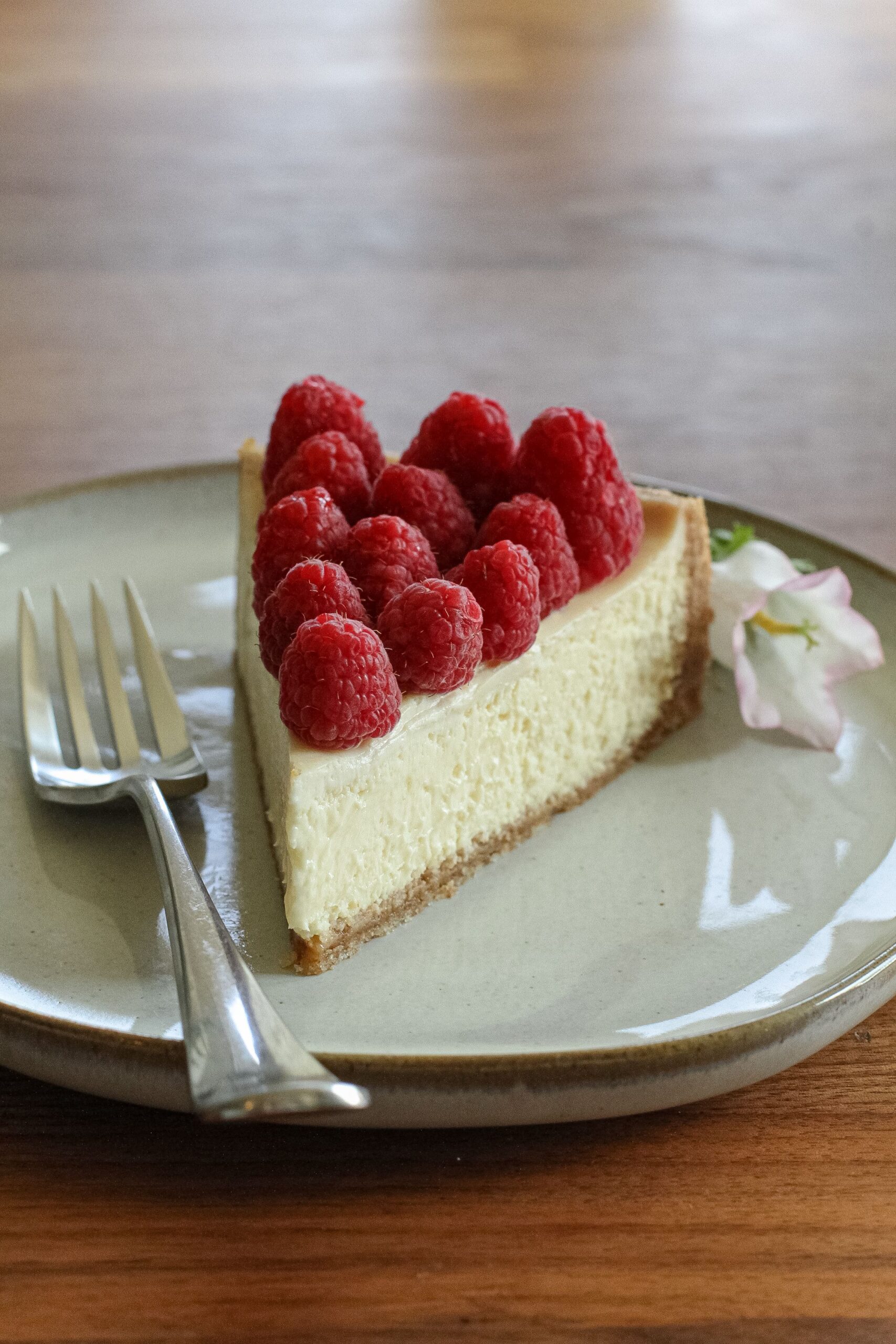
The cooling phase is where great cheesecakes are won or lost. Sudden drops in ambient temperature cause rapid contraction, tearing cracks through the center:
- The Oven Door Rest (1 Hour): When baking time finishes, turn off the oven, crack the oven door open 2 inches with a wooden spoon, and leave the cheesecake inside undisturbed for 60 minutes. The temperature drops gradually while the residual steam finishes setting the center.
- Release the Edges: Remove from the water bath, peel away foil, and run a thin, flexible paring knife around the inside rim of the pan. As the cheesecake cools further, it shrinks inward; releasing it prevents it from clinging to the sides and pulling cracks in the center.
- The Refrigerator Set (Overnight): Cool completely on the counter for 1 hour, then refrigerate uncovered for at least 8 hours (ideally 24 hours). Cold temperatures solidify dairy fats into that signature creamy New York texture.
Frequently Asked Questions
Can I bake this cheesecake without a water bath?
You can place a roasting pan filled with boiling water on the bottom oven rack directly beneath the cheesecake. While slightly less effective than direct immersion, the steam helps moderate oven heat and prevents severe cracking.
How do I cut perfectly smooth, clean slices?
Dip a long chef’s knife into a tall glass of hot tap water, wipe it clean and dry with a kitchen towel, and make a single downward slice. Wipe and reheat the blade between every single cut.
Can I freeze New York cheesecake?
Yes, it freezes exceptionally well. Chill the cake solid, remove the springform collar, wrap tightly in multiple layers of plastic wrap and heavy foil, and freeze for up to 3 months. Thaw overnight in the refrigerator before serving.