The aroma of freshly baked cinnamon rolls wafting through a morning kitchen is one of baking’s greatest rewards. Yet home bakers frequently encounter disappointed results: dry, bread-like spirals, filling that leaks out and hardens into candy on the bottom of the pan, or rolls that turn tough within hours. Crafting pillowy, bakery-style cinnamon rolls requires understanding yeast dough hydration, enriched gluten development, and the secret technique that keeps the centers melt-in-your-mouth soft.
Enriched Dough Science: Balancing Fats and Gluten
Unlike lean breads like baguettes or sourdough that rely solely on flour, water, salt, and yeast, cinnamon roll dough is heavily enriched with dairy fats and eggs. This enrichment changes how the dough develops:
- Tenderizing Gluten Strands: Butter and egg yolks coat the gluten proteins (gliadin and glutenin), preventing them from forming tough, chewy networks. This ensures a delicate, cake-like pull rather than a crusty bread chew.
- Warm Liquid Activation: Yeast functions optimally between 105°F and 115°F (40°C–46°C). Liquids hotter than 120°F (49°C) will kill yeast cells, while cold liquids delay fermentation by hours.
- Bread Flour vs. All-Purpose Flour: Using bread flour provides slightly higher protein content, giving the rolls enough structural elasticity to hold heavy layers of butter, sugar, and cinnamon without collapsing.
The Bakery Secret: The Warm Cream Pour
Commercial bakeries known for exceptionally gooey centers utilize a simple kitchen technique: pouring warm heavy cream over the proofed rolls immediately before they enter the oven.
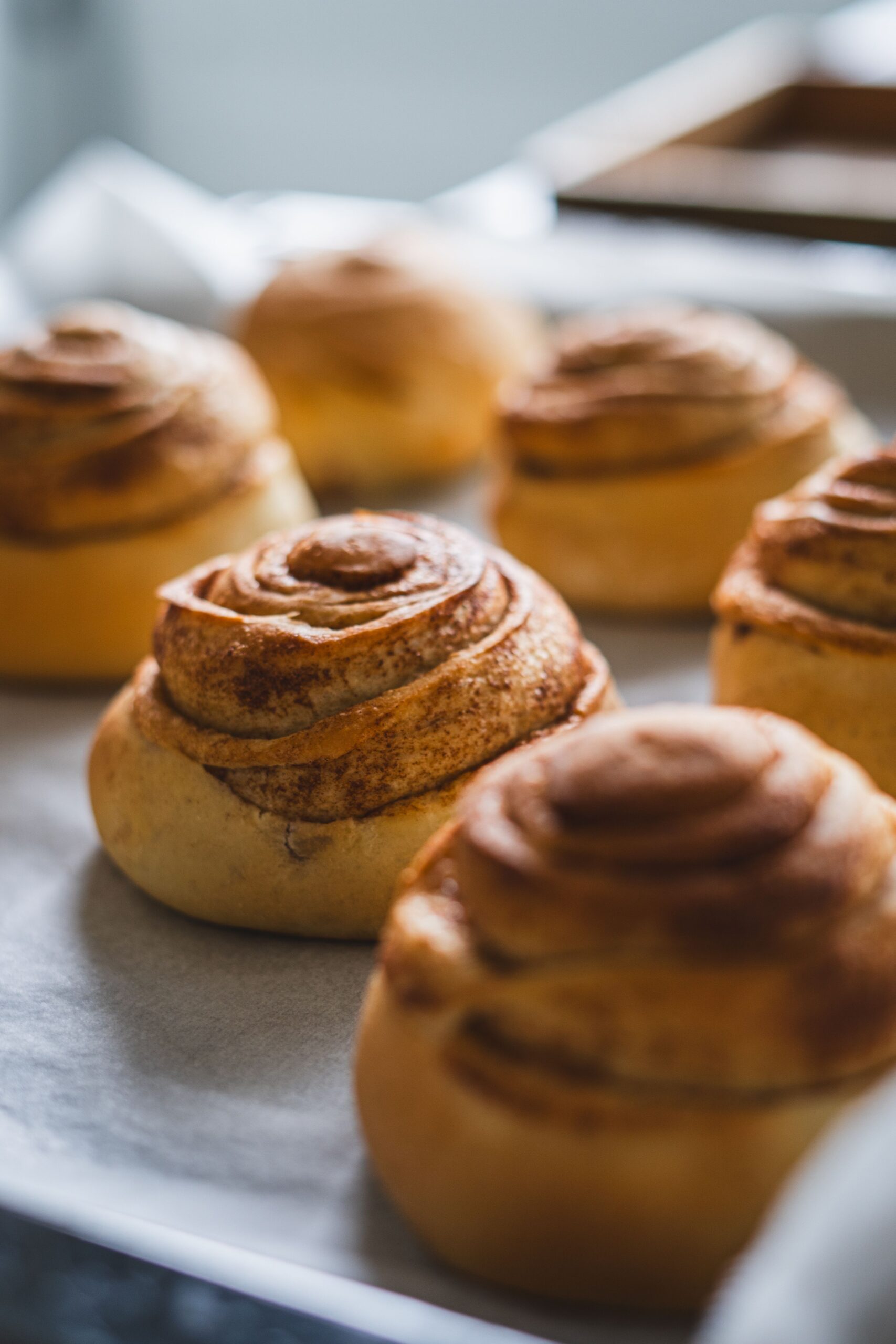
As the rolls bake, the warm heavy cream heats up and performs two critical tasks:
- Creates Ambient Steam: The evaporating cream produces gentle moisture within the baking dish, keeping outer dough walls soft and supple instead of turning crusty.
- Forms a Caramel Bed: Any brown sugar and butter that seeps down dissolves into the cream, transforming into a silky, decadent caramel sauce that keeps the bottom layers tender.
Essential Ingredient Measurements
| Component | Key Ingredients | Baking Purpose |
|---|---|---|
| The Dough Base | 4 cups bread flour, 1 packet (7g) instant yeast, 3/4 cup warm milk, 1/3 cup sugar, 2 eggs, 1/3 cup melted butter | Builds an enriched, pillowy crumb structure with gentle lift and golden coloration. |
| The Spiced Filling | 1/3 cup softened butter, 1 cup dark brown sugar (packed), 2.5 tbsp ground Korintje cinnamon | Melts into a fragrant, gooey spiral ribbon without leaking dry sugar. |
| The Moisture Secret | 1/2 cup heavy whipping cream (warmed to lukewarm) | Poured over rolls right before baking to ensure soft, melt-in-your-mouth centers. |
| The Tangy Glaze | 4 oz cream cheese (softened), 1/4 cup butter, 1.5 cups powdered sugar, 1 tsp vanilla | Cuts through sweet sugar with refreshing dairy tang and velvety coverage. |
Step-by-Step Preparation Protocol
- Knead the Dough: Combine warm milk, sugar, and instant yeast in the bowl of a stand mixer. Add eggs, melted butter, salt, and bread flour. Knead with the dough hook on medium-low speed for 7 to 8 minutes until smooth, supple, and slightly tacky. Form into a ball, place in a greased bowl, cover, and let rise for 60 to 90 minutes until doubled in size.
- Roll and Fill: Turn dough out onto a lightly floured surface. Roll into a neat 12×18-inch rectangle roughly 1/4-inch thick. Spread softened butter evenly across the surface, leaving a 1/2-inch border at the top edge. Liberally sprinkle the dark brown sugar and ground cinnamon mixture over the butter, patting it down gently with your hands so it adheres.
- Roll and Slice with Floss: Starting from the long edge closest to you, roll the dough snugly into an even cylinder. Avoid using a dull kitchen knife to cut the log, as pressing down squashes the layers. Instead, slide unflavored dental floss or clean sewing thread under the log, cross the ends over the top, and pull firmly to slice clean, uncompressed 1.5-inch rolls.
- Second Proof: Arrange the slices in a greased 9×13-inch baking dish, leaving a small gap between each. Cover loosely and allow to rise a second time for 30 to 45 minutes until puffed and touching.
- Warm Cream Soak and Bake: Preheat oven to 350°F (175°C). Warm 1/2 cup of heavy whipping cream until lukewarm and pour evenly over and between the risen rolls. Bake immediately for 22 to 26 minutes until tops turn lightly golden brown.
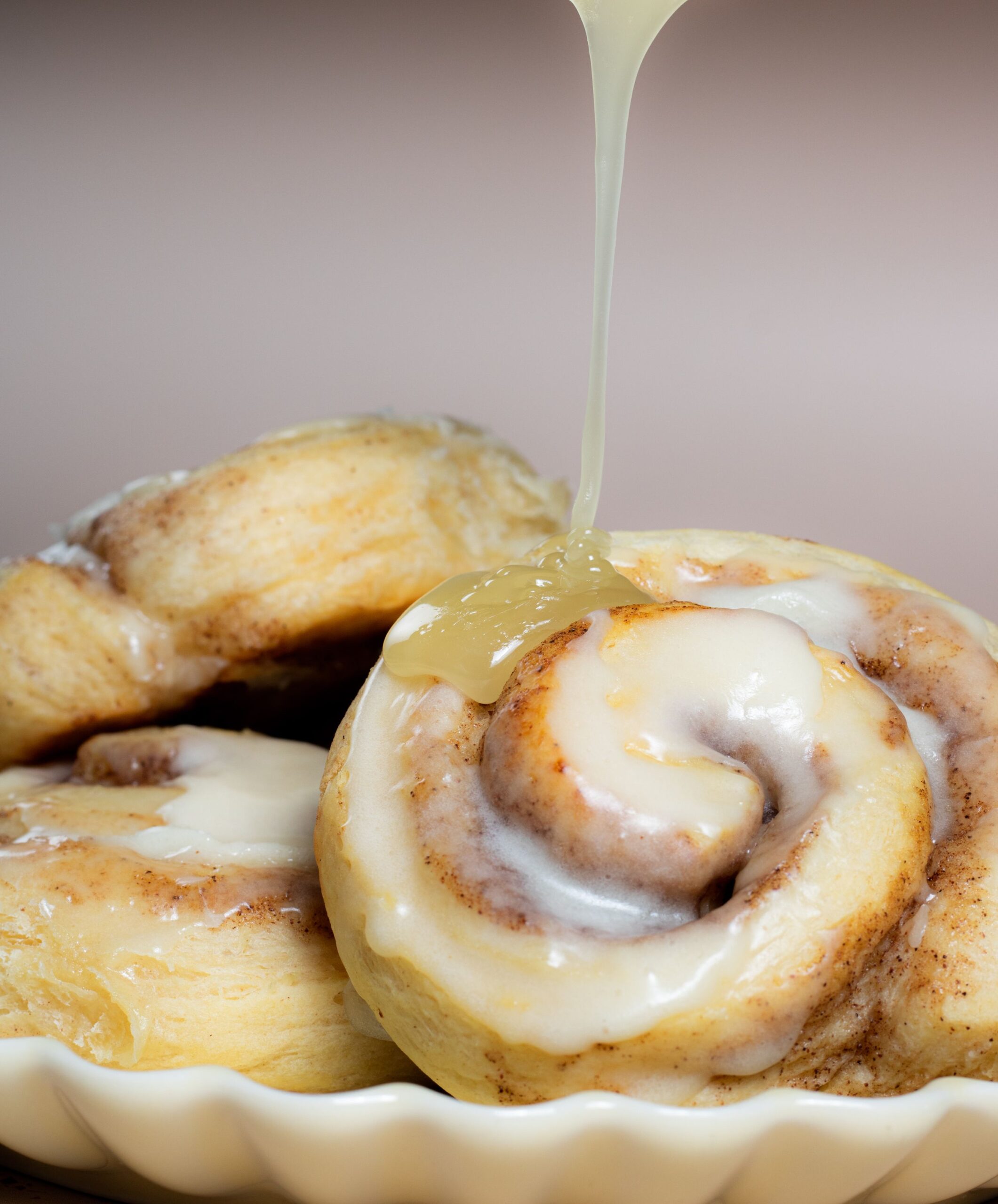
- Double-Glaze: Beat softened cream cheese, butter, powdered sugar, and vanilla extract until smooth. Spread half of the icing over the rolls while they are warm from the oven so it melts deep into the spirals. Spread the remaining frosting once rolls have cooled slightly for a thick bakery finish.
Overnight Make-Ahead Instructions
To enjoy fresh cinnamon rolls in the morning without waking up at dawn, utilize cold fermentation:
- Complete the recipe through slicing and arranging the rolls in the baking dish.
- Cover tightly with plastic wrap and transfer immediately to the refrigerator for up to 14 hours. Cold temperatures slow yeast activity while developing richer, fermented flavor notes.
- In the morning, bring the dish to room temperature for 45 to 60 minutes to complete its second rise, pour over the warm cream, and bake as directed.
Frequently Asked Questions
Can I use all-purpose flour instead of bread flour?
Yes. All-purpose flour yields tender rolls, but they will be slightly softer and more delicate. Bread flour provides the ideal structure to support heavy butter and sugar fillings.
How can I keep leftover cinnamon rolls soft?
Store baked and iced rolls in an airtight container at room temperature for up to 3 days. Microwave individual rolls for 15 seconds before eating to restore their soft, freshly baked texture.
Can I freeze baked cinnamon rolls?
Yes. Cool un-iced rolls completely, wrap tightly in plastic wrap and aluminum foil, and freeze for up to 2 months. Thaw at room temperature and warm gently before adding fresh cream cheese icing.